
Suzuki SV-7S: What Changes From the SV650?
Suzuki's SV-7S keeps the 645cc V-twin and adds the SV-7GX's ride-by-wire electronics. We go through the engine changes and what they mean for SV parts.
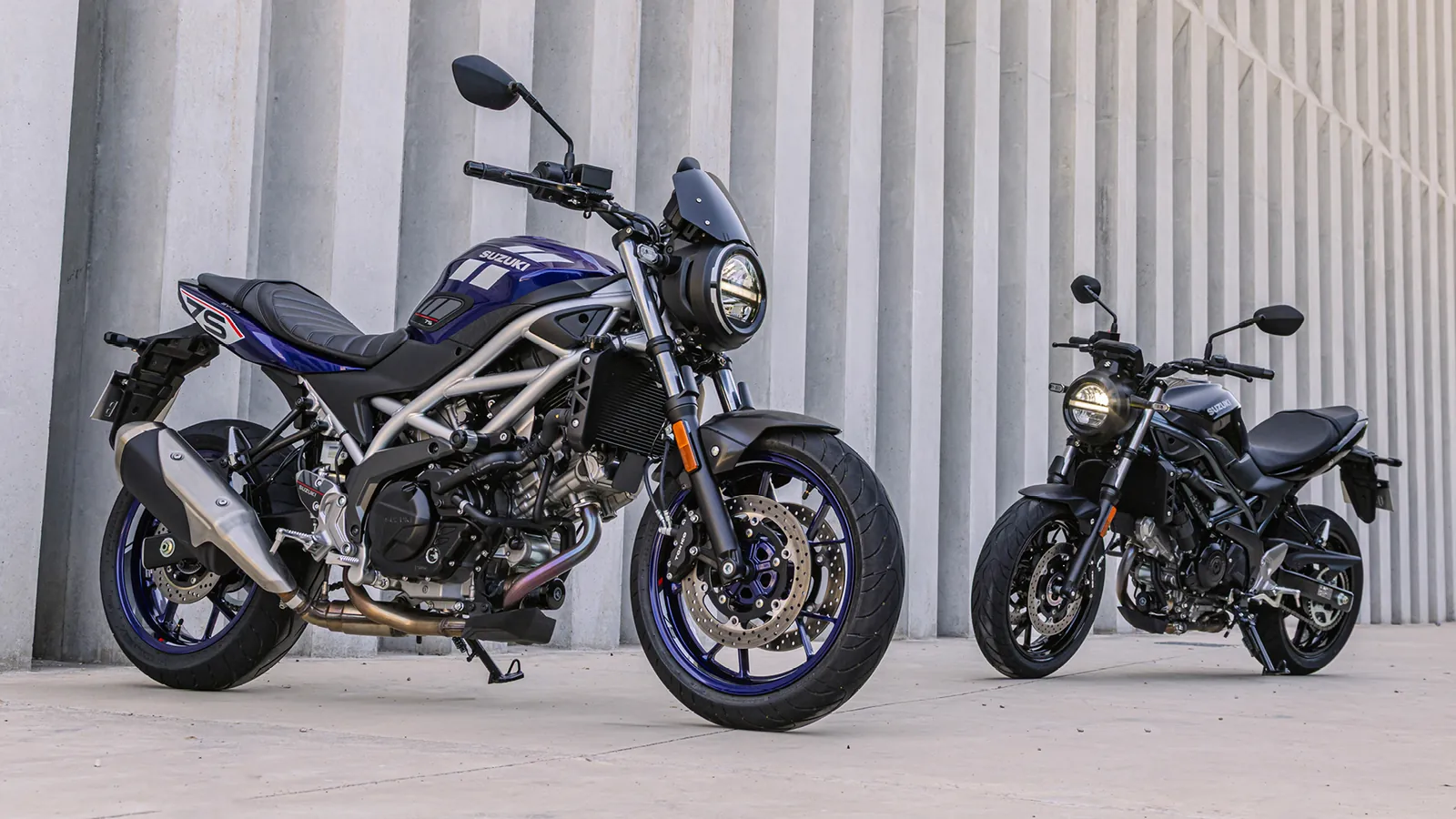
The SV-7S answers the question SV650 owners have been asking since the SV-7GX appeared a year ago: will the naked bike get the new electronics too? It does. It keeps the 645cc 90-degree V-twin and gets the ride-by-wire package Suzuki first used on the GX. Suzuki UK's launch release says it "continues the legacy of Suzuki's SV650".
The SV-7GX did it first
The SV-7S isn't the first SV-badged bike with these electronics. At EICMA 2025 Suzuki showed the SV-7GX, a crossover using the same 645cc V-twin, with ride-by-wire, three power modes, three-level traction control and a two-way quickshifter. Suzuki UK says the engine returned "across Europe in 2026 in the SV-7GX", and that "like the 7GX, the 7S boasts a new suite of electronics".
So the SV-7S is best read as the SV-7GX's engine and electronics in a lighter naked bike, not as a separate new design. The GX has a 17.4-litre tank and a 795mm seat, with paultan reporting 211kg. The 7S has a 14-litre tank, a 785mm seat and a 200kg kerb weight.
What changed inside the V-twin
Suzuki UK lists these engine details. It doesn't say which of the first two are new compared with the SV650, whose engine already used Suzuki's plated bores:
- SCEM cylinder plating, Suzuki's composite coating applied straight to the aluminium bores
- Oil-jet piston cooling, spraying oil under the pistons
- New transmission gears
- A new magneto, the engine's charging generator
- A downdraft intake layout with new intake and throttle bodies
- A new catalytic converter for Euro 5+
The figures are 73PS at 8,500rpm and 64Nm at 6,800rpm, the same as paultan reported for the GX. Suzuki hasn't presented this as a power upgrade. The changes are about emissions, cooling the pistons and fitting the ride-by-wire throttle bodies.
Those changes make the intake, charging system and transmission important areas to check when sourcing parts. A new assembly does not prove that every component inside it differs; individual compatibility needs the manufacturer's parts information.
The electronics
From Suzuki UK:
- Ride-by-wire via a new wiring loom, which makes the rest possible
- Three power modes: A and B reach the same peak, with B softer; C softens the throttle and caps output at 61PS
- Three traction control modes
- A bi-directional quickshifter
- Easy-start and low-rpm assist, carried over in principle from the old SV
- A colour TFT with smartphone navigation, weather and notifications
No cruise control is listed for the SV-7S. Suzuki UK mentions it only for the GSX-10R. If cruise matters to you, don't assume a ride-by-wire bike has it.
Our view: the cable-throttle SV650 was liked partly because it was so simple. The SV-7S keeps the engine character but swaps in a loom, throttle bodies and a controller for the cable. That brings modes and traction control. It also means more electrical parts, and more that can be damaged in a crash.
The chassis
The steel trellis frame stays. Suzuki UK mentions tapered aluminium handlebars, wider than the SV650's, suspension settings revised with comfort in mind, and Dunlop Roadsmart 3 tyres. It doesn't give brake or suspension hardware details. The tank holds 14 litres and has been redesigned to save weight. The SV-7S also gets a round LED headlight, LED indicators and a slim seat unit.
The 785mm seat and 200kg kerb weight keep it close to where the SV650 sat, which is a large part of why the SV has suited shorter and newer riders. Presumably Suzuki chose not to move it.
What it means for SV650 parts
This is the angle most relevant to us. SV650 parts already require care across generations, model years and variants. The SV-7S adds another distinction for buyers checking a listing or ordering a replacement.
Likely different: throttle bodies and intake, wiring loom, switchgear, dash, magneto and stator, gearbox internals, exhaust and catalytic converter, headlight and indicators, tank, seat unit and handlebars. Suzuki names these as new or redesigned, or they depend on the new ride-by-wire system.
Possibly shared, check first: frame parts, pistons, cylinders, some engine cases and covers, wheels, brake calipers, levers and pegs. Suzuki hasn't published enough to confirm any of these. A shared part number is the only proof.
Don't swap: throttle and engine-management electronics between a cable-throttle SV650 and the SV-7S. A ride-by-wire bike needs throttle-grip sensors and controller parts the older bike never had.
For owners of older SVs, nothing changes. Their parts stay their parts. The point is to watch for listings that just say "SV 645cc" and ask which bike it came from.
What's still unknown
UK price, exact delivery dates beyond Suzuki UK's spring 2027, and the brake and suspension specification. If you'd rather buy an SV650 now, our used motorbike checklist and middleweight naked-bike guide cover the checks and the alternatives.