
Suzuki GSX-10R: The K5 Connection Explained
Suzuki's GSX-10R uses a 152PS four with K5 roots and a reworked top end. We look at what changed, its GSX-S1000 link and what it means for parts.
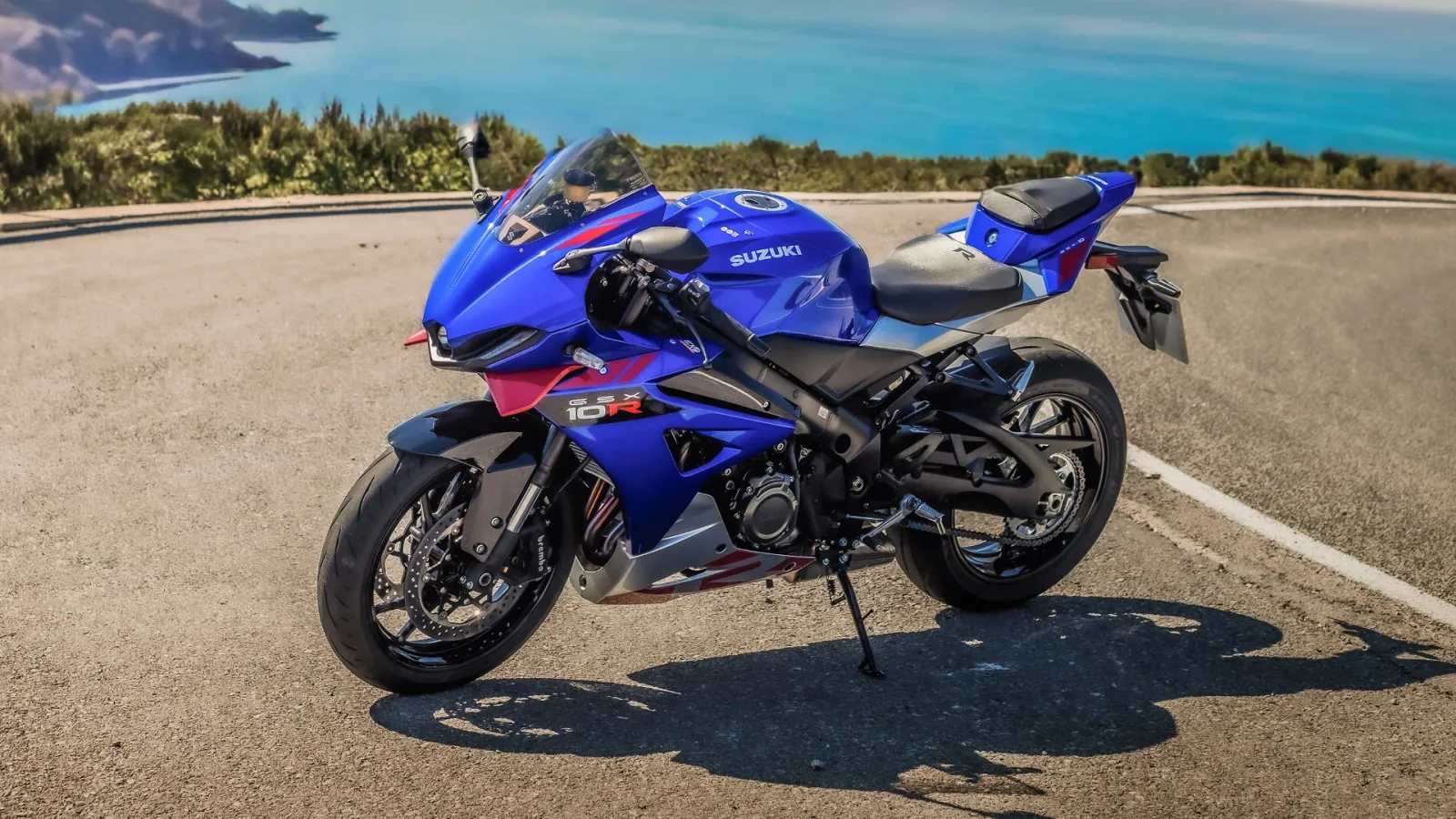
Suzuki's GSX-10R is a new fully faired sportsbike for 2027, and one label explains much of the interest: K5. Suzuki's global announcement explicitly identifies that engine heritage, while the UK release focuses on the revised 152PS inline four. The connection is real, but it needs explaining before drawing conclusions about the bike or its parts.
What "K5" actually means
Suzuki's year codes for the 2000s ran K1 for 2001 through to K9 for 2009, so K5 means 2005. The 2005 GSX-R1000, the K5, brought in a new 999cc four. A version of that engine has been used ever since in Suzuki's road bikes, including the GSX-S1000 naked, its GT and GX touring versions, and the Katana.
Motorradonline's report makes the link that matters. The GSX-10R's quoted output, 152PS at 11,000rpm and 106Nm at 9,250rpm, matches the GSX-S1000 family's current figures exactly. So the closest relative here isn't a 2005 superbike. It's the engine already in Suzuki's current road range, itself descended from the K5.
What Suzuki says it changed
Suzuki UK lists new camshafts, a new cam chain sprocket, cylinder head, barrels, cases and crank journals. It says the changes are for reliability and for future fuels with more alcohol in them. Suzuki doesn't go into more detail.
That list is the most important thing in the release for anyone who maintains these engines. The head, barrels, cases, cams and crank journals are a large share of an engine's main parts. Peak power and torque haven't changed, but Suzuki says the parts that make them have. Two engines can have the same capacity, the same output and the same family name and still be different underneath.
The rest of the bike
From Suzuki UK, plus Global Suzuki's release for the weight:
- Frame: aluminium, with main spars running straight from the steering head to the swingarm pivot; a new aluminium swingarm and subframe
- Steering: steering-stem offset cut from 35mm to 30mm
- Suspension: fully adjustable KYB, with 43mm forks and a newly designed shock
- Brakes: Brembo front calipers on 310mm discs, with a radial master cylinder
- Tyres: Bridgestone Battlax Hypersport S23, 120/70 R17 front and 190/55 R17 rear
- Size: 810mm seat (Suzuki says 15mm lower than the GSX-R), 18-litre tank, 214kg kerb weight
- Electronics: a six-axis IMU; traction, lift, roll-torque and slide control with 10 settings; three power modes with the same peak power and softer delivery; lean-sensitive ABS; a bi-directional quickshifter; three engine-braking settings; cruise control with a speed limiter; launch control; a brake hold that keeps rear brake pressure for 30 seconds; and low-rpm assist
The offset change is an interesting detail. Reducing offset increases trail if other dimensions stay the same, but steering behaviour also depends on rake, wheelbase, tyres and the rest of the chassis. It would be premature to predict the result from that one measurement. Suzuki positions the GSX-R1000R around outright performance and gives the 10R a broader road-and-track brief; a test ride will establish how that feels.
The 214kg kerb figure is a useful starting point for comparisons, but check that each rival's figure uses the same definition and includes comparable fuel and equipment. It cannot tell us how heavy the bike will feel when moving it around a garage or turning at walking pace.
What it means for parts
This is where the K5 label can mislead.
Don't take a 2005 GSX-R1000 part as a match. Twenty years of development sit between that engine and this one, before Suzuki's latest changes to the head, barrels, cases, cams and crank journals.
Don't take a GSX-S1000 engine part as a match either. It's the closest relative, but Suzuki names exactly the parts that changed. Gaskets, cam chain parts and anything that bolts to the head or cases need a part number check against the GSX-10R's own parts information.
Chassis parts are new. The frame, swingarm and subframe are new. The bodywork has no predecessor. Brake and suspension parts may share supplier families with other Suzukis, but share isn't the same as fit.
Electronics are their own system. A new IMU-based package with launch control, brake hold and cruise control means sensors, switchgear and controllers belong to this bike. Don't move them over from older models on looks alone.
Owners of K5 bikes and GSX-S1000s are the GSX-10R's natural audience. But a shared engine family is a reason to check, not proof of fit. Until Suzuki's parts catalogue covers the GSX-10R, the honest answer for most engine parts is "check the number".
What's still unknown
No UK price has been published. Suzuki UK gives summer 2027 for availability. How the bike rides on British roads will need road tests, and the summer 2027 timing means those are some way off.
If you're shopping for an older K5 or a GSX-S1000 in the meantime, our used motorbike buying checklist is a good place to start.