
Honda Africa Twin 1150: Which Version Fits?
Honda's 1,131cc Africa Twin range adds an Enduro Sports and optional radar assistance. We compare the figures with the 1100 and explain each version.
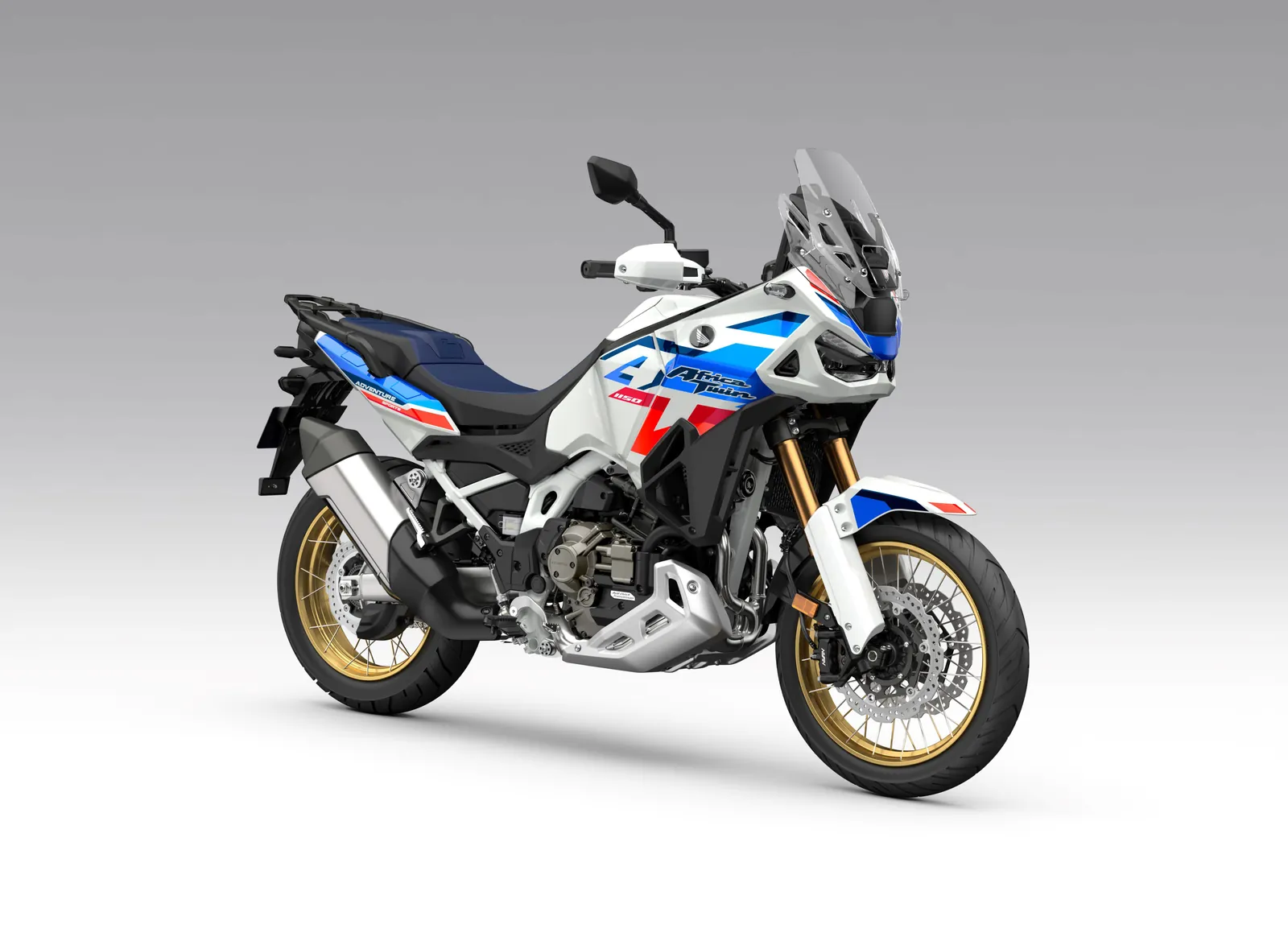
Honda has split the Africa Twin into three bikes for 2027. The new CRF1150L range is the standard Africa Twin, the Adventure Sports and a new Enduro Sports. All three share a bigger engine and a new frame, and the Adventure Sports is Honda's first motorcycle to offer radar rider assistance.
The model name says 1150. The engine doesn't, and that's the first thing worth getting right.
The engine: 1,131cc, not 1,150
Honda's 3 November release lists a liquid-cooled 1,131cc parallel twin making 87.5kW at 7,500rpm and 119Nm at 5,700rpm. Honda credits the gains to a larger bore, a higher compression ratio, revised intake and exhaust, and new gear ratios.
For context, the 2024 CRF1100L had a 1,084cc engine, reported at 102hp at 7,500rpm and 112Nm at 5,500rpm. That makes the new engine 47cc bigger. Peak power rises by roughly 15–17%, depending on how the old figure is converted, and peak torque by about 6%. Peak power arrives at the same 7,500rpm and peak torque 200rpm higher.
Those peak figures show a worthwhile increase, but do not reveal the shape of the whole torque curve or the response at everyday revs. Honda also revised the gearing, which will affect how the gains feel on the road. Full curves and road tests are needed before describing the new engine as simply stronger everywhere.
The chassis
Honda describes a new frame and swingarm, 1.4kg lighter than before, with what it calls a revised rigidity balance. There's also a fuel sub-tank under the seat. Carrying some of the fuel low and in the middle of the bike lowers the centre of gravity, especially with a full tank, when a tall adventure bike feels heaviest at walking pace.
What Honda doesn't publish yet: kerb weights, seat heights, suspension travel, or the standard bike's tank size and wheel sizes. Any figures you see for those in early coverage aren't from this release.
The three versions
Africa Twin. The standard bike gets Showa EERA electronically controlled suspension with Skyhook control, an electrically adjustable windscreen, Honda Smart Key and an updated rider interface. Six riding modes link the engine output, traction control, ABS, suspension and DCT where fitted. The release does not confirm the new standard model's front-wheel size, so do not carry that figure over from the outgoing bike.
Adventure Sports. This is the touring version: a 24-litre tank, a 19-inch front wheel and a larger screen. That specification supports its road-touring brief, although wheel size alone does not determine steering or off-road ability. The outgoing Adventure Sports was reported with a 24.8-litre tank. Compare quoted range carefully until the new tank arrangement and consumption figures are fully documented.
Enduro Sports. The new variant takes its front suspension specification from the CRF450 RALLY, Honda's rally-raid machine, and gets CRF-style bodywork. Honda doesn't describe the rear suspension, the wheel sizes or whether it keeps electronic suspension. The positioning is clear, though: this is the version for riders who leave the tarmac on purpose.
SENSING RIDE, function by function
Honda's SENSING RIDE release describes a millimetre-wave radar at each end of the bike. At launch it is an option only on the Adventure Sports DCT. The functions it lists:
- Adaptive Cruise Control, which holds a set speed and gap to the vehicle ahead.
- ACC with Stop & Go, which Honda says works with DCT to make automatic stops and smooth starts in queuing traffic. Pulling away without rider input needs an automatic gearbox, which is presumably why the option is tied to DCT.
- Group Ride Assist, ACC adapted to keep spacing in a group, including staggered formation.
- Distance Assist, which adjusts the gap as you close on a vehicle ahead under throttle.
- Forward Collision Warning on the dash, backed by a Brake Pulse alert.
- Emergency Brake Assist, which adds braking when you are already braking and a collision looks possible.
- Blind Spot Information in the mirrors, Rear Distance Information on the dash, and Rear Collision Warning, which flashes the indicators at traffic behind.
Two things stand out. First, the list doesn't describe fully automatic emergency braking. Adaptive cruise slows the bike to hold a gap, but Emergency Brake Assist is described as adding to braking the rider has already started. Second, Honda says each function has limits that riders shouldn't overestimate, and that performance varies with road, weather and vehicle conditions. A motorcycle leans, and radar aimed along a straight line behaves differently from radar on a car. How well it copes on a bending A-road is the thing to look for in road tests.
What it means for parts
A new frame, swingarm and engine internals mean the CRF1100L and CRF1150L should be treated as separate generations for parts. Bolt-on items such as levers, mirrors or some luggage may carry over, but nothing should be assumed. The frame, swingarm, engine internals, exhaust and anything mounted to the redesigned chassis need a part number match. The same goes for wiring and sensors on radar-equipped bikes, which have hardware the 1100 never had.
The same caution works in reverse. Honda describes a new frame and swingarm, not revised ones, so a CRF1100L part's existing fitment list shouldn't quietly grow to include the 1150. A used 1100 is still a complete, well-documented motorcycle in its own right. Our used motorbike buying checklist covers what to check on one.
What's still unknown
UK prices, delivery dates, weights and seat heights. Honda's global release covers none of them. Those numbers will decide the choice between the three versions more than the engine figures, especially the gap between the Adventure Sports with and without SENSING RIDE.